
My Approach
MY APPROACH
Look Beyond the Tooth.
A restoration can be beautiful and still fail if we ignore why the tooth broke, how the bite moves or what the rest of the system is doing. The tooth may be the headline, but it is not always the whole story! My approach begins by understanding the problem in context—and defining the destination before treatment begins.
Start With Why.
Dentistry often begins with something visible: a broken tooth, a missing tooth, wear, crowding, an old restoration or a smile that no longer feels like the patient. The visible problem matters! It just may not be the entire problem.
Why did the tooth fracture? Where are the forces coming from? Is there enough room to place the restoration where it belongs? Does the existing bite support the proposed change? Are clenching, muscle activity, restricted anatomy or sleep-related concerns contributing to what we see?
Not every question leads to additional treatment. It does, however, lead to a more informed decision. The goal is not to make dentistry more complicated—dentistry is perfectly capable of doing that on its own! It is to avoid making a simple solution less predictable by overlooking the reason it became necessary.
See the Whole Picture.
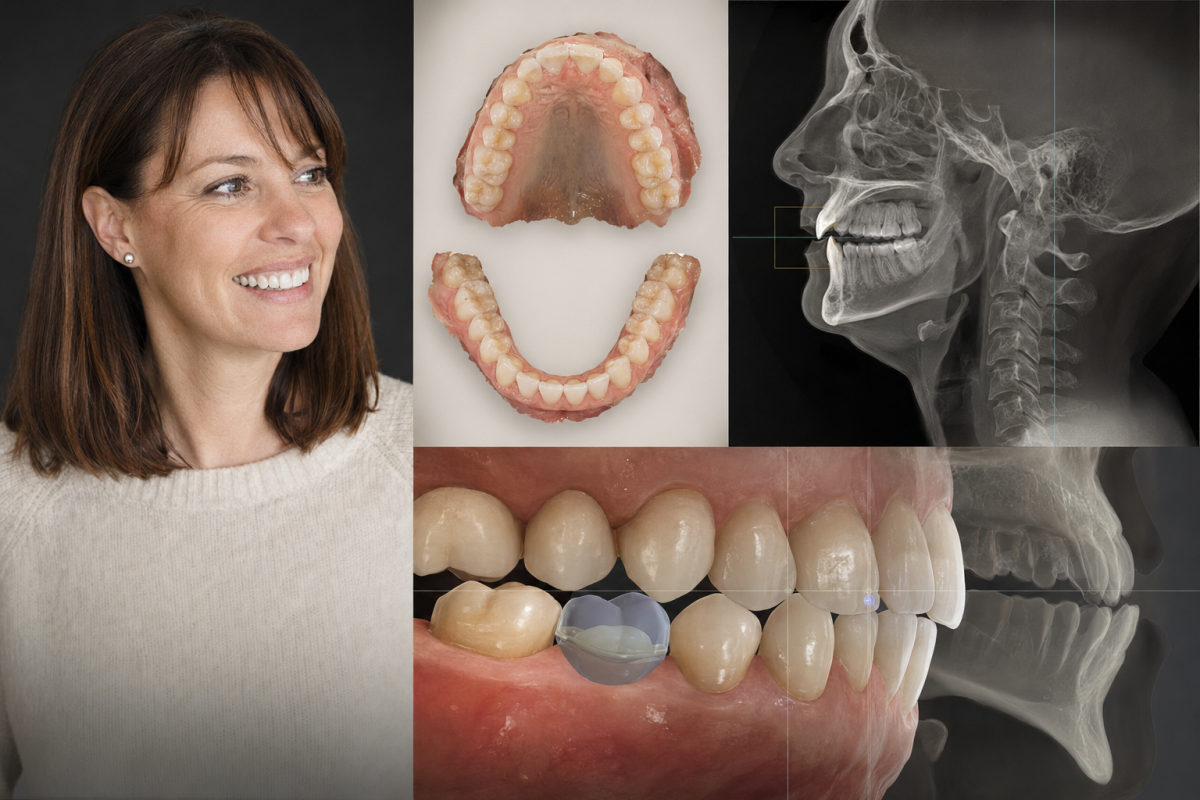
A conventional dental examination gives us important information. Modern records let us study the same problem from several perspectives and combine those views into a more complete model. This is where the digital tools become incredibly useful!
Photography
Facial, smile and close-up photographs capture proportion, color, texture, wear and the relationship between the teeth and the face. Photography also gives the patient, dentist and laboratory a shared visual language.
Related page: Digital Smile Planning →
Digital Scanning
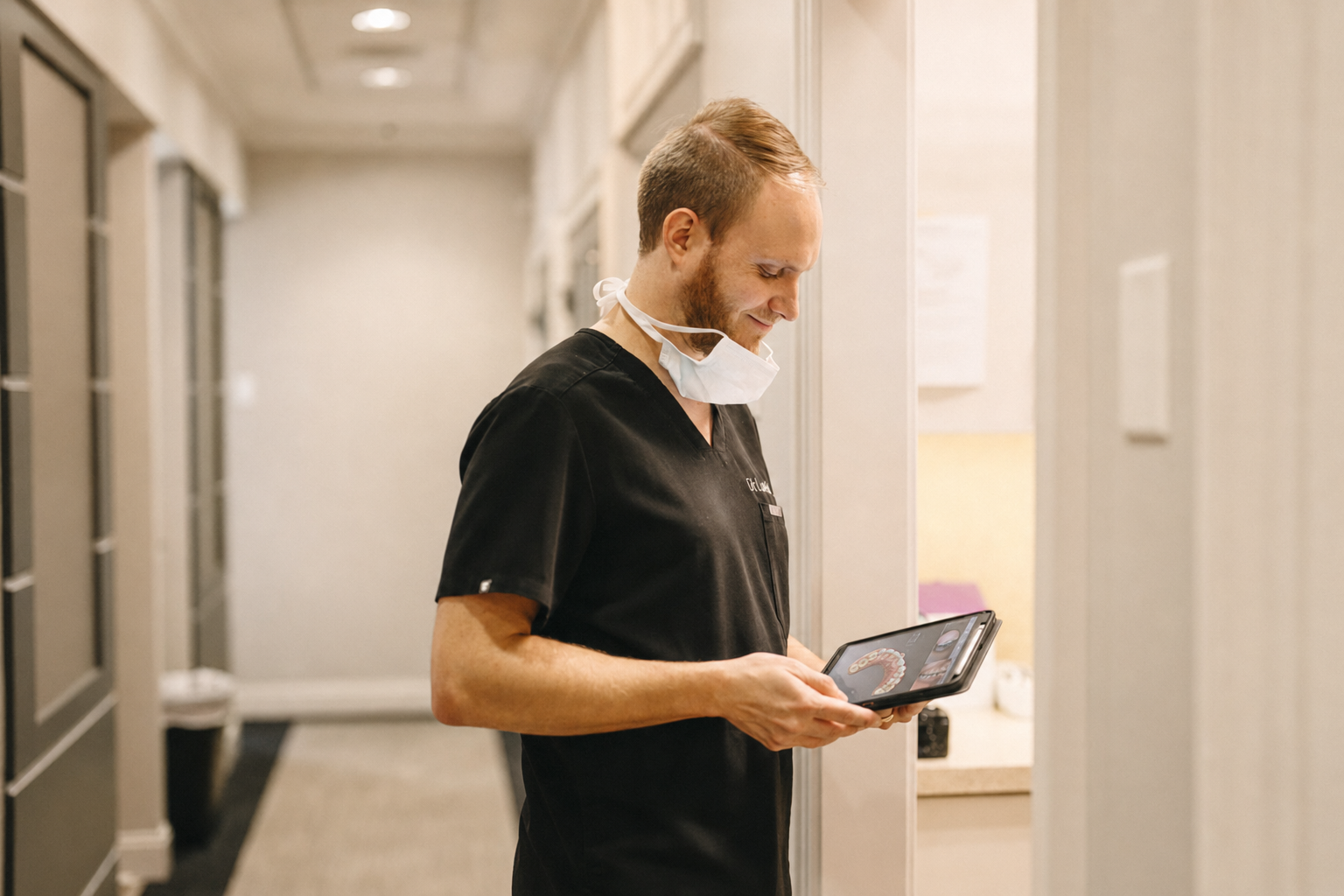
An intraoral scan records the teeth, gums and bite without reducing them to a flat image. Scans can be compared over time, combined with other records and used to design restorations, appliances, surgical guides and provisional teeth.
Related page: Digital Planning →
3D Imaging
When clinically appropriate, CBCT reveals anatomy that conventional dental X-rays cannot show in the same way. It can help evaluate bone, roots, impacted teeth, sinuses, joints and other structures relevant to treatment planning.
Related page: Understanding CBCT →
Functional Records
How the teeth contact—and how the jaw moves through those contacts—can be as important as how the teeth look when the patient is holding still. Wear patterns, muscle symptoms, joint findings and provisional restorations all help us understand function.
Related page: Why the Bite Matters →
Design the Destination. Then Work Backward.
The order of planning matters. If a patient needs an implant, the first question should not be, “Where can an implant fit?” It should be, “Where does the tooth need to be?” Once the intended tooth position, smile and bite are defined, the implant can be evaluated and planned to support that result.
The same principle applies to cosmetic and reconstructive dentistry. We begin with the face, the smile, the function and the available biology. We can then determine what should be preserved, what needs to move, what requires restoration and which material or technique is appropriate.
In sleep and airway care, the destination must also be defined carefully. Are we trying to improve nasal breathing, create transverse skeletal space, stabilize the bite, reduce sleep-disordered breathing or address several separate problems? Similar symptoms can have different causes, and the treatment should follow the diagnosis—not the other way around.
Use Technology to Improve Decisions.
I love dental technology! (No one who knows me will be surprised by that.) But technology is not the treatment philosophy. A scanner does not make a diagnosis. A CBCT does not choose a procedure. A printer does not create a good design on its own.
The value comes from connecting the information. Digital records allow us to test ideas before changing teeth, evaluate anatomical limits, communicate with laboratories and specialists, fabricate guides and provisionals, and compare the result with the original plan.
Sometimes the most advanced use of technology leads to less treatment: a smaller restoration, a more conservative preparation or the decision to monitor rather than intervene.
See the Digital Planning Workflow →
Test What Can Be Tested.
Whenever possible, I prefer to test a major change before committing to the final result. A digital mock-up can preview a proposed smile. Provisionals can help evaluate shape, speech, esthetics and function. A temporary full-arch restoration allows the patient and clinical team to refine the design during healing. An oral appliance can be titrated and objectively retested rather than judged only by how the patient feels.
Testing does not eliminate uncertainty, but it gives us information while the plan can still be adjusted. That is a MUCH better time to discover a problem than after the final dentistry is finished!
Teeth, Bite, Breathing and Sleep.
The teeth and jaws are part of a larger system. The same anatomy that shapes a smile also influences tongue space, nasal dimensions, jaw position and the way forces move through the teeth. Patterns such as a narrow arch, crowding, tooth wear, clenching or altered tongue posture may be reasons to ask more questions.
Those findings are clues—not a diagnosis of a sleep disorder. CBCT is a static anatomical image and cannot show what happens to the airway throughout a night of sleep. When sleep-disordered breathing is a concern, appropriate evaluation includes objective sleep testing and medical interpretation. Dental treatment can then be considered as one part of a coordinated plan.
That distinction is important to me. Airway-conscious dentistry should broaden the evaluation without pretending that every dental finding has one cause or that one appliance solves every problem.
Comprehensive Does Not Mean Complicated.
Comprehensive does NOT mean “do everything!” Looking at the whole system does not mean every patient needs comprehensive reconstruction. Often, it helps us identify the smallest appropriate treatment and protect the natural tooth structure that remains.
A small bonded restoration performed under isolation deserves the same attention to diagnosis, materials and bite as a larger case. Conversely, when several problems are connected, treating them one tooth at a time without an overall plan can create more dentistry, not less.
The right scale of care depends on the patient’s goals, health, anatomy, risk, timing and priorities. My responsibility is to make those tradeoffs visible and help the patient understand the options.
Patients Should Be Able to See the Plan.
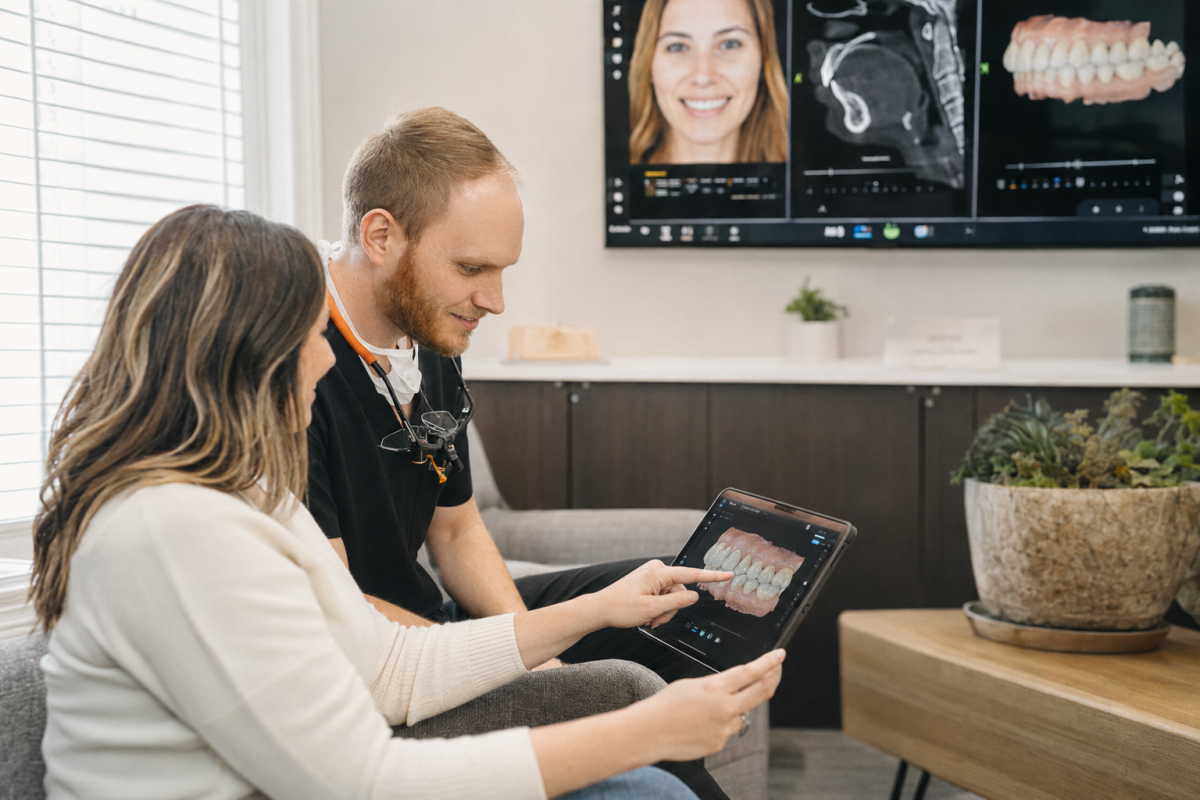
Dental language can make a straightforward idea sound unnecessarily complicated. If I cannot explain the plan clearly, I probably need to keep working on it! Photographs, scans and digital plans help patients see what we see. They also make it easier to explain what is known, what remains uncertain and why one option may be more predictable than another.
I want patients to understand what we are doing, what it should accomplish, what the alternatives are and what will be required to maintain the result. Informed patients are better partners in complex treatment—and are often more comfortable with conservative treatment too.
Plan Carefully. Execute Precisely. Follow the Result.
Delivery day is an important milestone, but it is not the end of the case. Dentistry lives in a changing biological system. Teeth move. Muscles adapt. Bone and gum tissue remodel. Materials wear. Home care and maintenance matter.
After treatment, we verify the bite, review hygiene, document the result and establish an appropriate maintenance plan. When long-term follow-up is available, it becomes part of how I evaluate the treatment—and part of what I want to share in the Case Library.
The Same Standard at Every Scale.
Whether the case involves one filling, one front tooth, a narrow maxilla or an entire arch of implants, the framework remains the same:
Understand the concern. Gather the right information. Identify the contributing factors. Define the desired outcome. Work backward into a plan. Test what can be tested. Execute carefully. Maintain and follow the result.
That is the approach behind the work on this site—and the reason I still find dentistry endlessly interesting! Every case is different, every person is a puzzle, and perfect prior planning can prevent plenty of problems—and produce better outcomes!