
Sleep & Airway
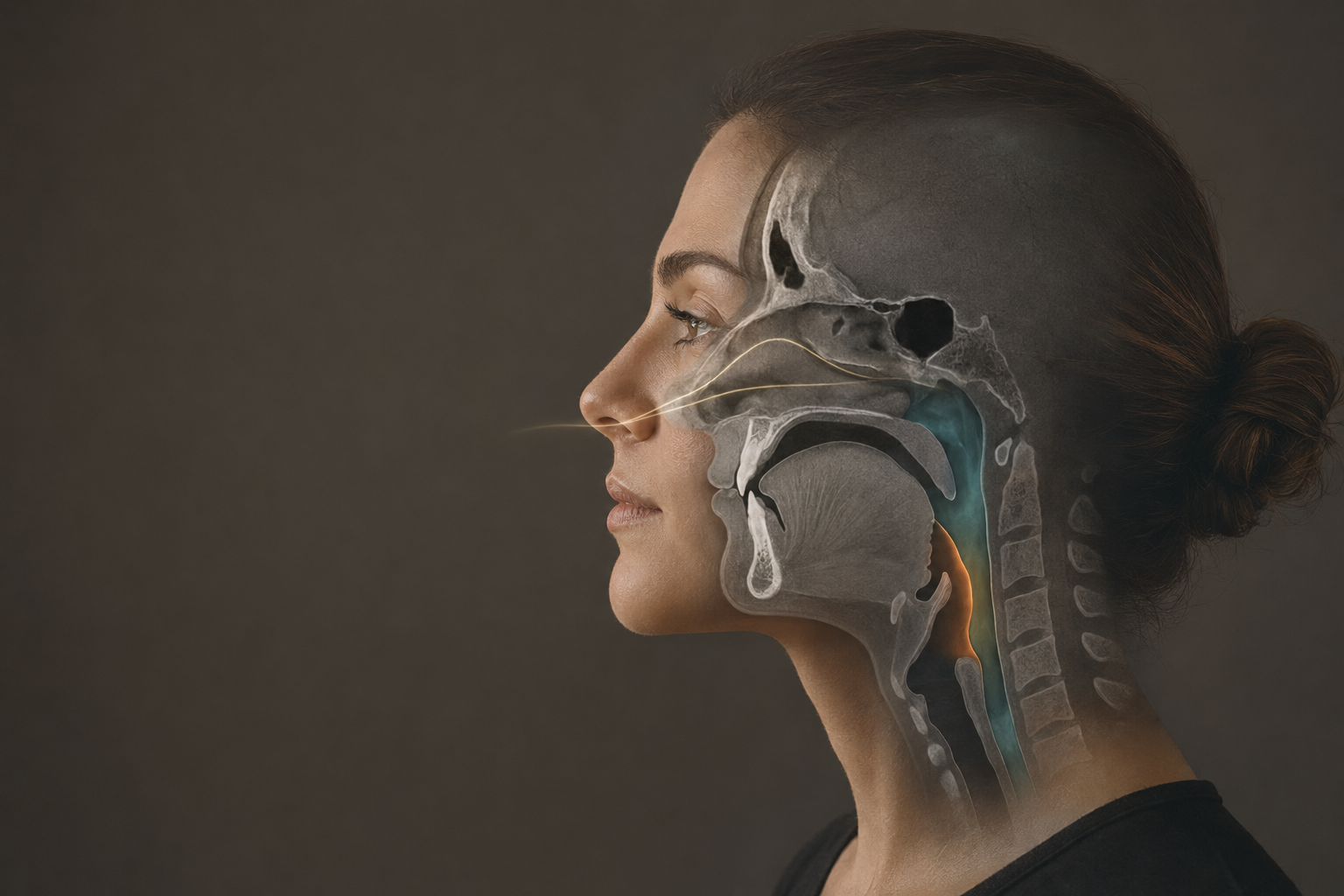
SLEEP & AIRWAY
Breathing Is Automatic. Good Breathing Is Not.
The mouth leaves clues! A narrow arch, crowded teeth, worn edges, clenching or a dry mouth may be part of a larger breathing or sleep story. They may also come from something completely different. That is why we ask questions before jumping to conclusions.
Airway-conscious dentistry does not mean calling every dental problem “airway.” It means noticing patterns, knowing what dentistry can answer—and knowing when we need better data!
One System, Three Different Questions
Same neighborhood. Three different questions! Airway, sleep and skeletal structure overlap, but they are not interchangeable. Separating them keeps the evaluation honest.
Airway-Conscious Dentistry
What clues can the dental examination reveal about nasal breathing, oral volume, tongue posture, jaw relationships and the forces affecting the teeth? This is where we notice the pattern and decide whether it deserves a closer look.
Explore Airway-Conscious Dentistry →
Sleep-Disordered Breathing
What actually happens while you sleep? Snoring, increased breathing effort, respiratory events, oxygen changes and repeated arousals require objective testing and medical interpretation. Teeth cannot answer that question by themselves!
Understand Sleep-Disordered Breathing →
MARPE & Adult Maxillary Expansion
Is the upper jaw truly too narrow, and would skeletal expansion improve the available space, bite or treatment plan? MARPE is a structural treatment for selected patients—not the automatic answer to snoring, crowding or a narrow-looking smile.
Sleep-Disordered Breathing Is a Spectrum
Sleep is not simply normal or obstructive. Bodies rarely make things that tidy! Some people snore without significant respiratory events. Others experience increased effort, flow limitation, repeated arousals, oxygen changes or obstructive sleep apnea. Symptoms and severity do not always match neatly.
That is why I do not want to guess at a sleep diagnosis from tooth wear, a questionnaire or a CBCT image. Those findings may justify screening. Diagnosis requires objective sleep data interpreted by an appropriate medical provider.
Learn How Sleep Testing Fits In
Why the Dental Office Notices
We see the same mouths over and over—sometimes for years! That gives dentistry a front-row seat to gradual changes in tooth position, wear, gum health, muscle symptoms and oral habits.
The examination may reveal a narrow or high palate, crossbite, limited tongue space, anterior tooth wear, shifting or chipping teeth, a narrow smile corridor, dry tissues, clenching or a jaw relationship that deserves more attention. None of these findings proves a sleep disorder. Together with the patient’s history, they may tell us it is time to look deeper.
Screen. Measure. Test. Then Decide.
My preferred sequence is simple: start with the least assumption and earn the next step with evidence.
Begin With the Story
How do you breathe during the day? Is nasal breathing comfortable? Is sleep refreshing? Is there snoring, witnessed obstruction, morning headache, dry mouth, fatigue, clenching or a history of orthodontic relapse? The story tells us where to start.
Document the Dental and Skeletal Pattern
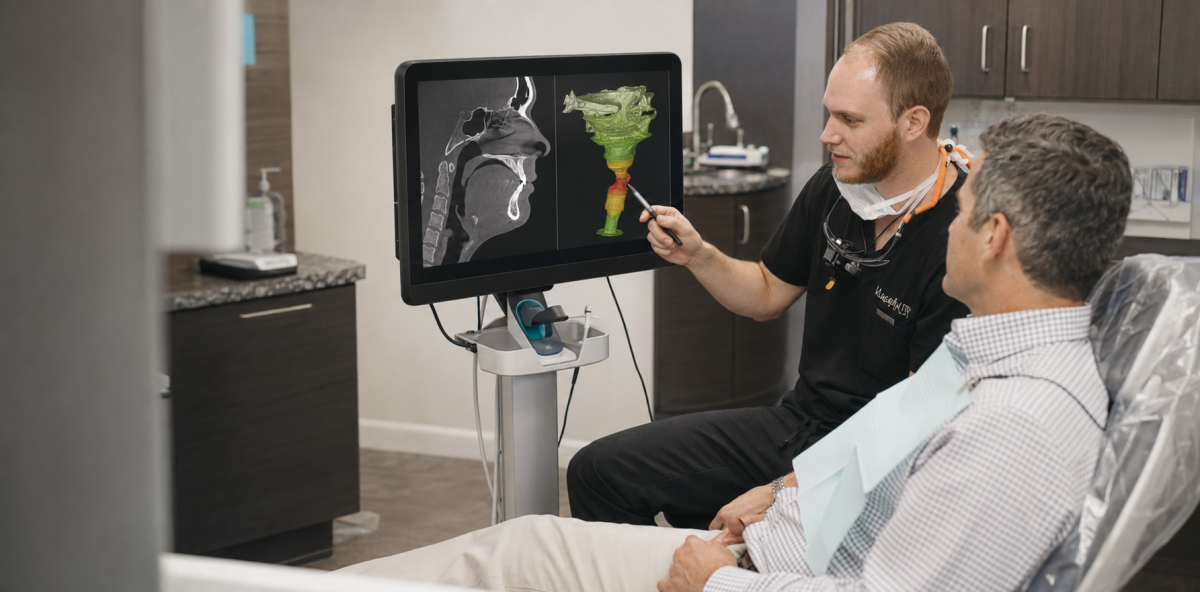
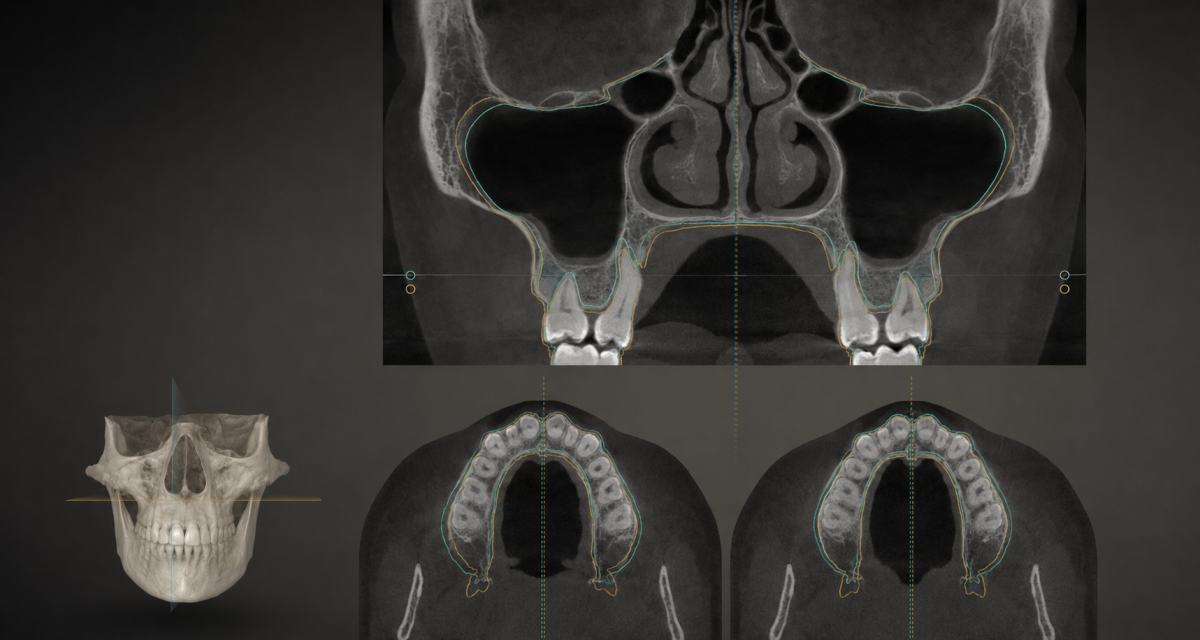
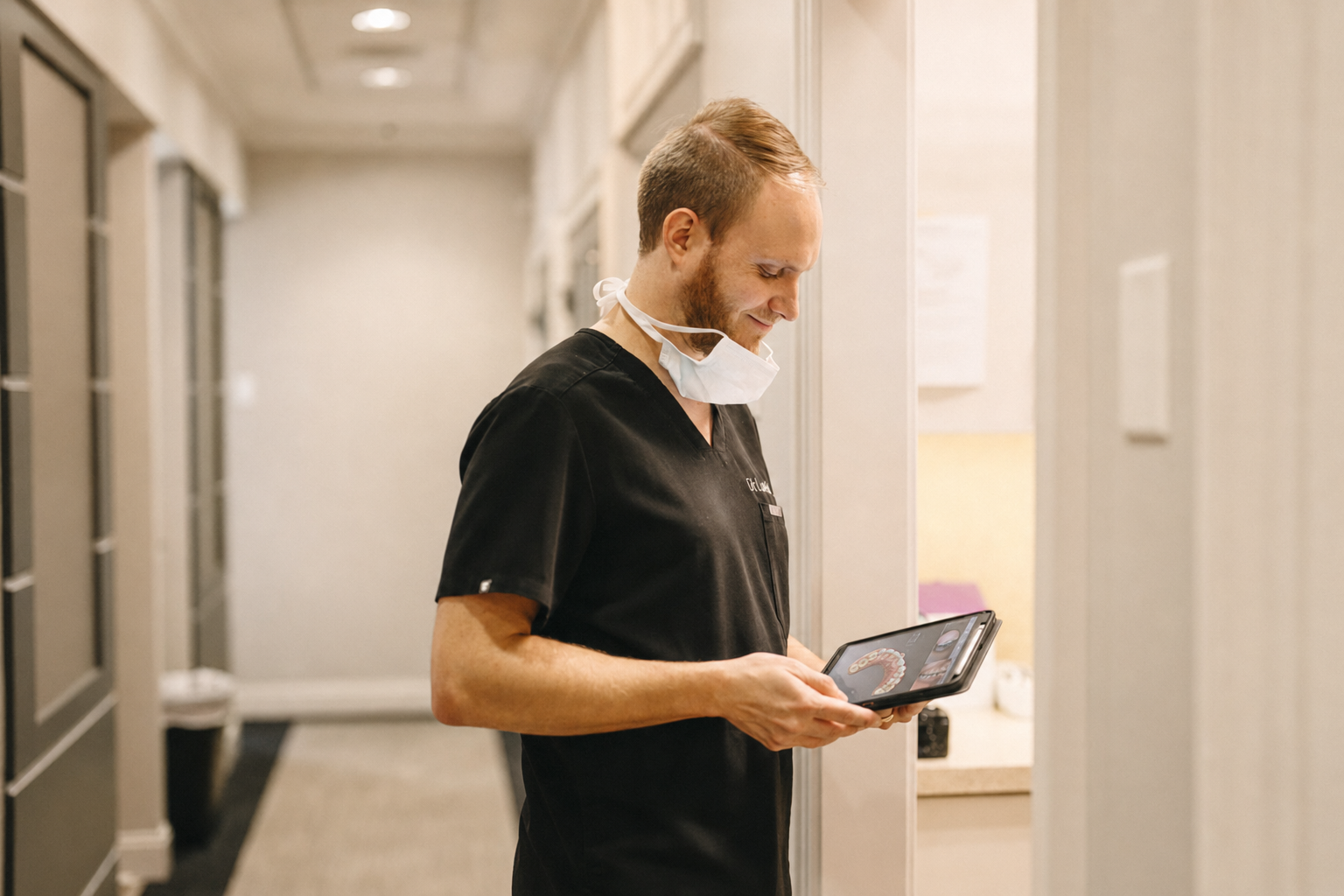
Photography, digital scans, bite evaluation and a clinical examination help us understand the teeth, arches, tongue space and jaw relationships. When it is clinically justified, CBCT adds important three-dimensional anatomical information. More data is useful when it answers a real question!
Use Objective Sleep Data When Sleep Is the Question
If sleep is the question, we need sleep data! For appropriate patients, home testing can be a convenient part of the diagnostic process. Other patients need in-lab polysomnography. The testing pathway and diagnosis belong with the medical provider interpreting the study.
Test Reversible Variables Before Irreversible Treatment
Nasal-breathing optimization, reversible appliance trials, titration and objective retesting can show us how a patient responds before we discuss structural treatment. A reversible response is useful information. It is not permission to skip the diagnosis!
Choose Structural Treatment Only When the Structure Supports It
If the maxilla is appropriately sized, I would not recommend MARPE simply because someone snores or has tooth wear. Expansion becomes a reasonable discussion when a true transverse deficiency is documented and the expected structural change fits the patient’s goals.
The Pinewood Airway Protocol
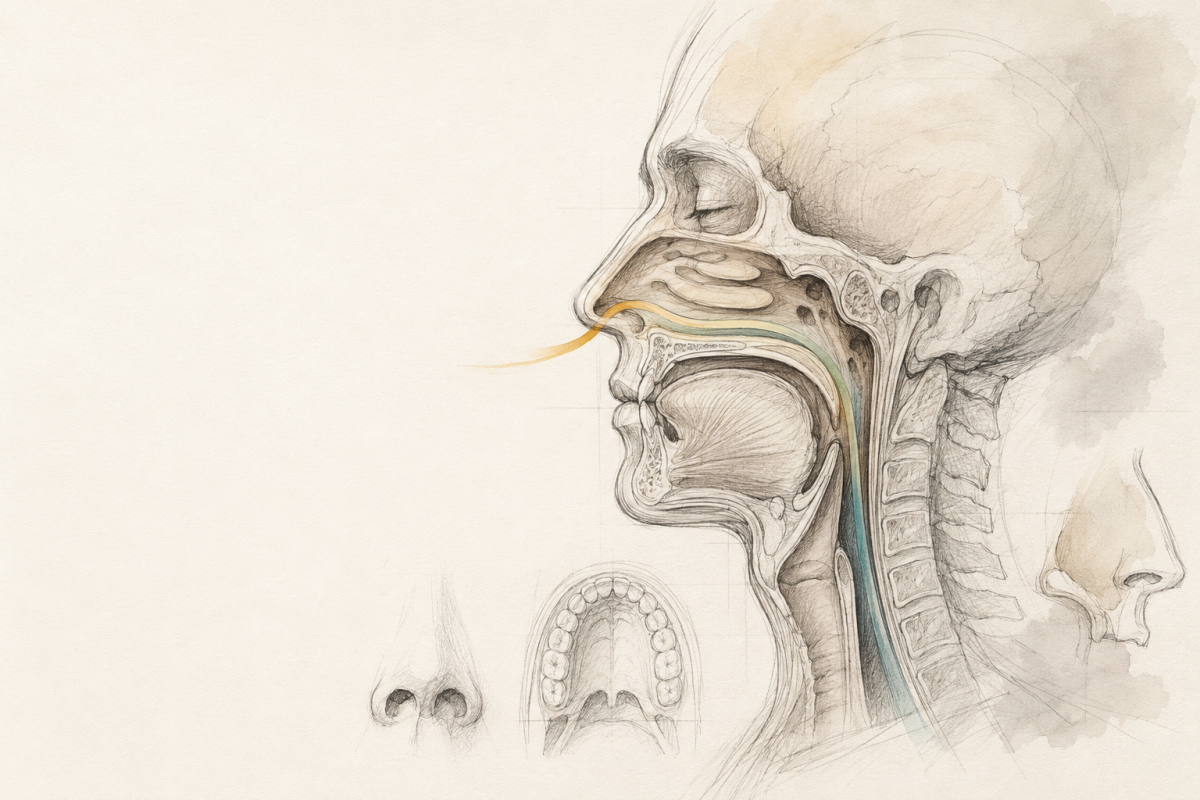
This is not a magic appliance or an “airway package!” It is a staged way to learn. We begin with the simplest reversible variables, including nasal breathing when appropriate. Then we evaluate changes in oral volume, tongue space, vertical support and jaw position one step at a time.
When sleep-disordered breathing is present, objective data and medical coordination remain part of the process. When skeletal deficiency is present, expansion may be considered. When CPAP is working well, we celebrate that success—we do not try to talk someone out of it! The protocol helps us understand the patient’s pattern and options. It does not replace accepted sleep treatment.
Treatment Should Match the Problem
Different patients may need very different combinations of care: medical or ENT management, positive airway pressure, a physician-prescribed oral appliance, positional or behavioral measures, myofunctional therapy, orthodontics, skeletal expansion, restorative treatment or surgery. There is no single finish line for every patient!
The most useful question is not, “Which airway treatment do you provide?” It is, “What problem are we solving, and how will we prove it worked?” That question keeps everyone honest!
Follow the Data, Not the Promise
Airway and sleep treatment should not be sold with certainty the evidence cannot support. Symptoms matter, but feeling better does not always mean respiratory events have resolved. When treatment is intended to change sleep-disordered breathing, follow-up testing is how we verify the result.
That same principle runs through the rest of my dentistry: define the destination, test what we can test and follow the result!