
Airway-Conscious Dentistry
AIRWAY-CONSCIOUS DENTISTRY
What the Mouth Can Tell Us About Breathing
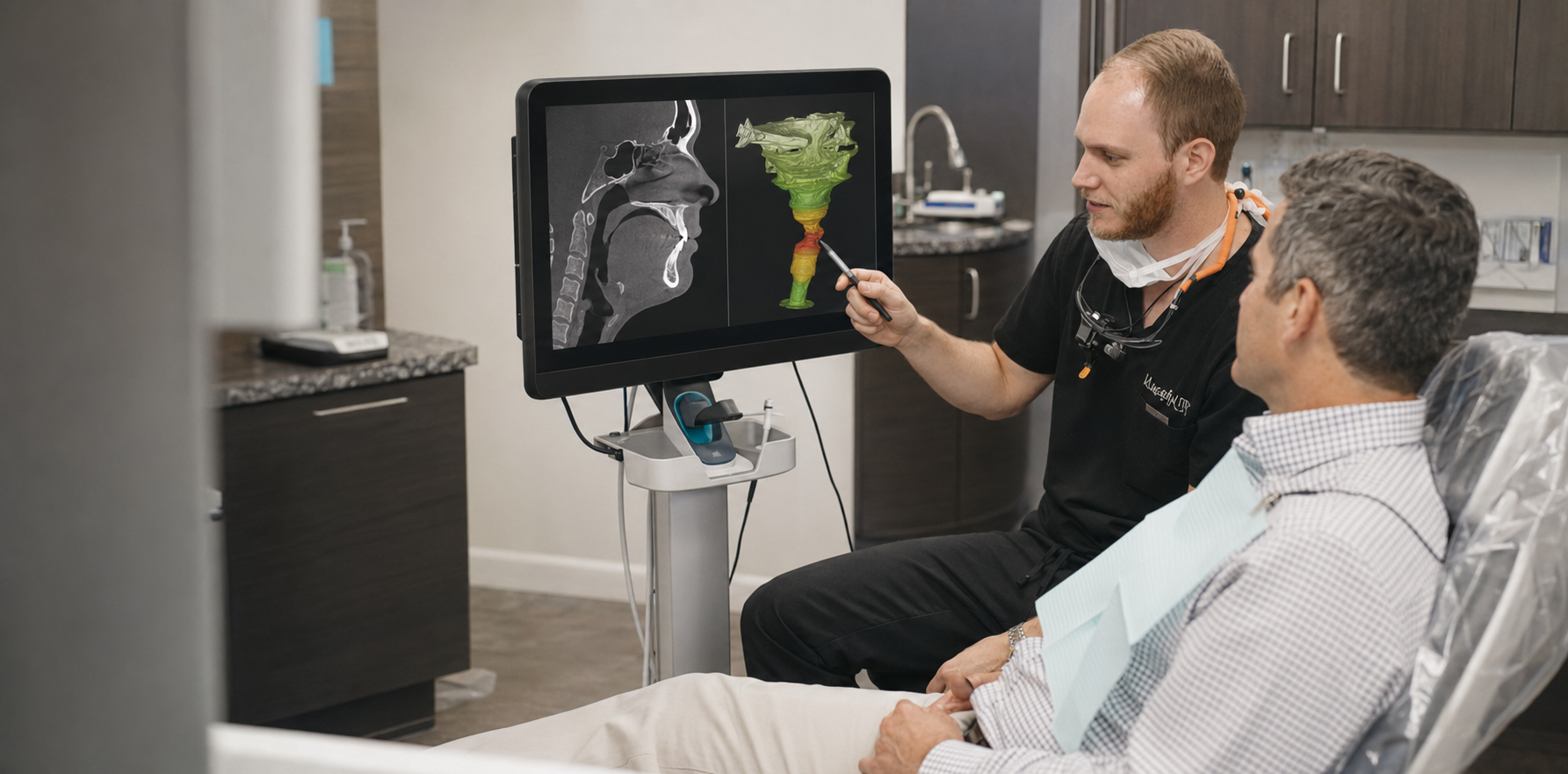
The mouth can be surprisingly chatty! The teeth, jaws, tongue and nasal airway all share connected space. When that space is restricted—or when breathing and sleep are not working comfortably—the mouth may leave clues long before anyone thinks to connect them.
A clue is not a diagnosis. That distinction matters! Airway-conscious dentistry means seeing the pattern, listening to the patient and knowing what to evaluate next.
Airway-Aware, Not Airway-Only
It is tempting to give every case one neat explanation. Tooth wear becomes “airway.” Crowding becomes “airway.” Clenching becomes “airway.” Real people are rarely that tidy!
Wear may come from the bite, diet, habits, reflux, sleep-related muscle activity or several factors at once. Crowding may reflect tooth size, arch form, growth or previous orthodontic movement. Clenching can occur with stress, pain, medication, neurological factors or disturbed sleep.
Airway-conscious dentistry gives us more questions to ask. It does not funnel every patient into the same treatment!
Patterns That May Deserve a Closer Look
Breathing and Sleep History
Chronic nasal obstruction, habitual mouth breathing, snoring, witnessed pauses, dry mouth on waking, morning headaches, restless sleep, daytime fatigue or difficulty feeling refreshed can justify additional screening. One symptom may mean very little. The pattern is what gets my attention!
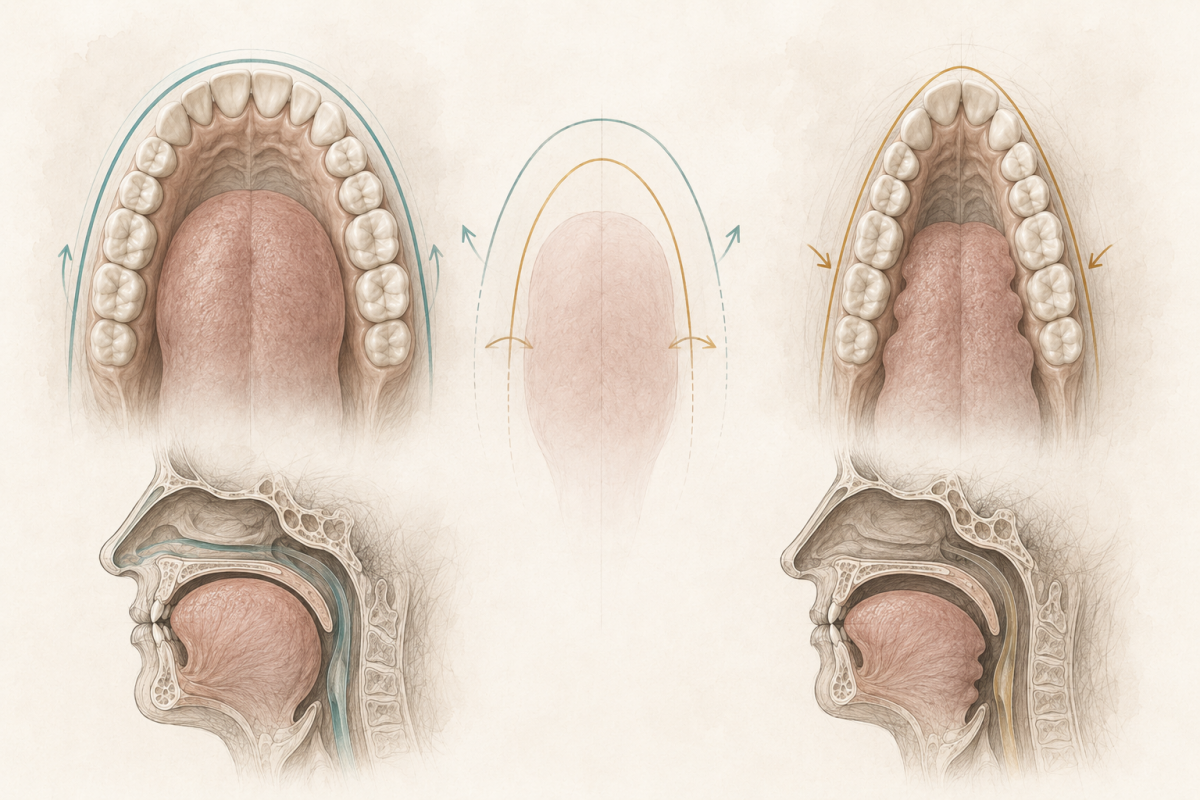
Arch Form and Oral Volume
A high or narrow palate, posterior crossbite, upper arch that is undersized relative to the lower arch, crowding, limited tongue space or teeth tipped outward to compensate for a narrow skeletal base may indicate a transverse problem. Sometimes the teeth have been doing a LOT of work to disguise the skeleton underneath!
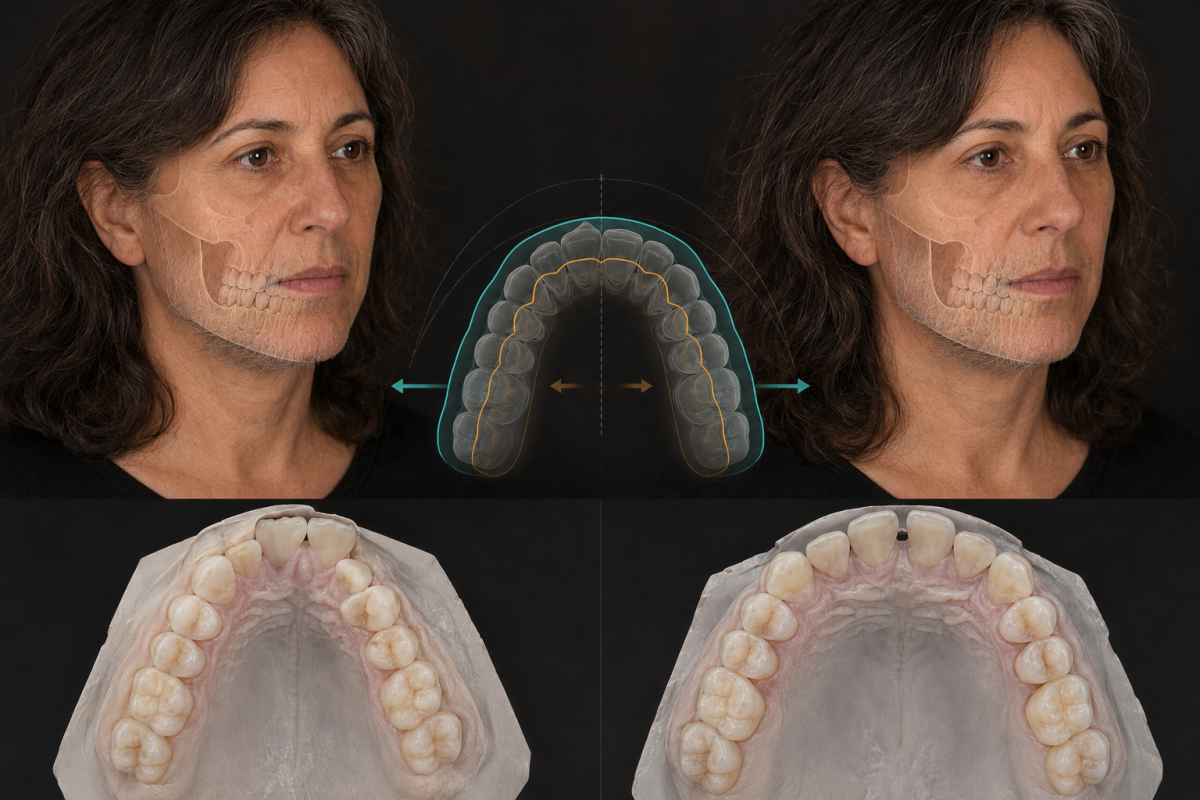
The Smile and Buccal Corridor
A broad dark corridor beside the teeth can be an esthetic clue that the visible dental arch is narrow. It does not prove skeletal deficiency, but it gives us a reason to compare facial photographs, digital scans, tooth inclination and the underlying maxilla. Pretty pictures still need measurements!
Wear, Movement and Fracture
Anterior tooth wear, shifting, chipping, cracked restorations, recession and orthodontic relapse can reflect forces that deserve evaluation. Before repairing the latest casualty, I want to understand what keeps loading the teeth!
Tongue, Tissues and Muscle Findings
A scalloped tongue, limited resting space, dry or inflamed tissues, muscle tenderness and clenching patterns may add context. Each finding is nonspecific. Together with the patient’s history, they help us decide whether the pattern matters.
The Airway-Conscious Evaluation
Listen Before Measuring
I want to hear the story before ordering the records! Symptoms, goals and history determine what information will actually be useful. Someone with unrefreshing sleep needs a different pathway from someone with a narrow smile and no breathing concerns.
Examine the Dental System
We evaluate tooth wear, arch relationships, tongue space, soft tissues, jaw position, muscles, joints and the bite. Photography and digital scans make those relationships easier to compare—and MUCH easier to explain!
Use 3D Imaging Selectively
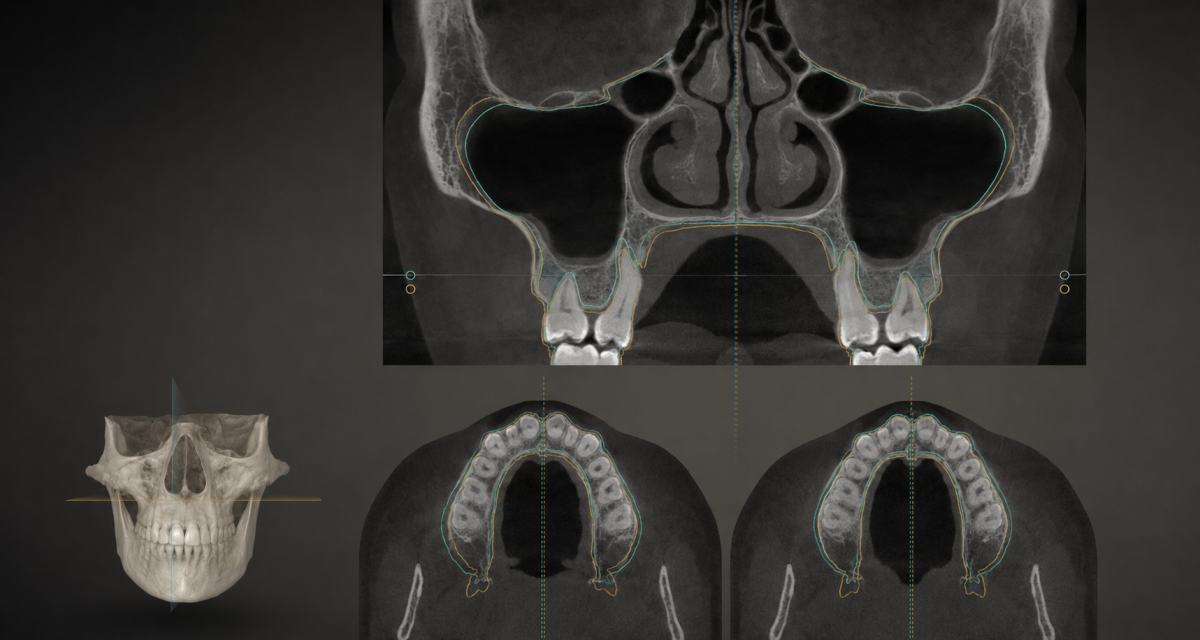
When clinically justified, CBCT can help evaluate skeletal width, nasal anatomy, sinuses, jaw position, joints, roots and available bone. It is incredibly useful—but it is still a snapshot, not a movie of someone sleeping!
Separate Anatomy From Physiology
Anatomy can suggest where a limitation may exist. Symptoms and reversible trials tell us how the patient responds. Objective sleep testing measures what happens during sleep. These pieces belong together, but they cannot stand in for one another.
Match the Next Step to the Finding
The next step may be simple nasal-breathing support, medical or ENT evaluation, sleep testing, a reversible dental trial, orthodontic assessment, MARPE evaluation—or no airway treatment at all! Sometimes the best plan is knowing what NOT to treat.
Begin With Nasal Breathing
Sometimes the smartest first step is also the simplest one! Comfortable nasal breathing supports normal oral posture. That may mean identifying congestion, discussing environmental or medical contributors or trying conservative nasal-breathing aids.
Mouth taping is not a treatment for obstructive sleep apnea and is not appropriate when nasal breathing is obstructed or when a patient’s medical situation makes it unsafe. If it is considered at all, it belongs within an individualized conversation—not a universal social-media recommendation.
The Pinewood Airway Protocol: Reversible Before Structural
Reversible before structural! That is the idea. The Pinewood Airway Protocol uses staged changes to learn how a patient responds before we commit to irreversible treatment. Nasal breathing comes first. Then we may evaluate tongue space, vertical support, muscle activity and jaw position with reversible appliances and objective reassessment.
This is much broader than simply advancing the lower jaw. We are trying to understand the patient’s physiology and compensations. If a skeletal transverse deficiency is documented and the maxilla is limiting nasal or oral volume, MARPE may become part of the discussion. If the maxilla is appropriately sized, it should not!
Airway and Restorative Dentistry
Airway evaluation is not separate from ordinary dentistry when the same forces are damaging teeth. Before rebuilding significant wear, changing the bite or creating a new smile, I want to know whether the existing pattern is stable. Otherwise, we may be beautifully restoring the same problem twice!
Sometimes the airway evaluation changes the sequence: stabilize sleep treatment, improve nasal breathing, expand a deficient maxilla or correct the bite before final restorations. Other times it confirms that conservative restorative treatment can proceed without a larger structural intervention. Either answer is useful!
The Goal Is Better Questions
Airway-conscious dentistry should make diagnosis more careful, not more dramatic! The goal is not to find “airway” in everyone. It is to miss it in fewer people—and avoid treating it where it is not the answer.