
Sleep-Disordered Breathing
SLEEP-DISORDERED BREATHING
Sleep Is More Than an AHI.
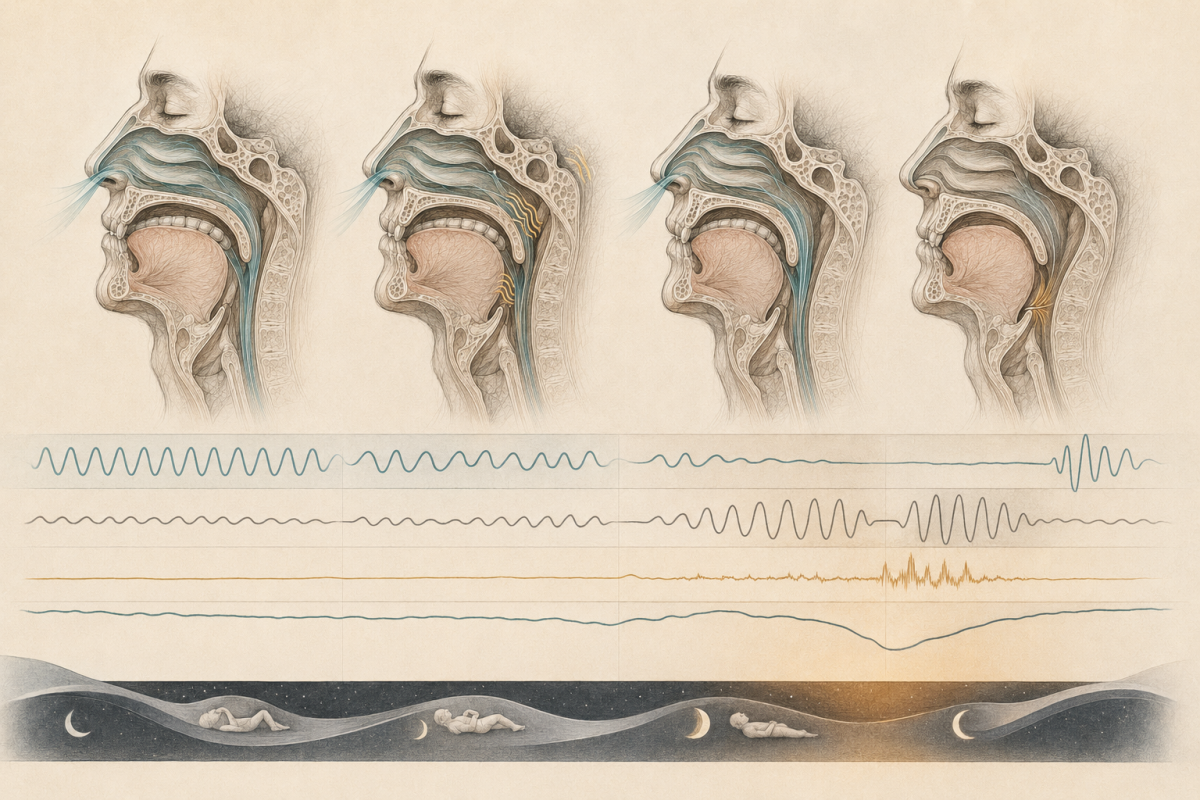
Sleep-disordered breathing exists on a spectrum—and the body does not always read the report the way we expect! Snoring, increased breathing effort, flow limitation, repeated arousals, oxygen changes and obstructive events can affect people very differently. A number marked “mild” may not feel mild to the person living with it.
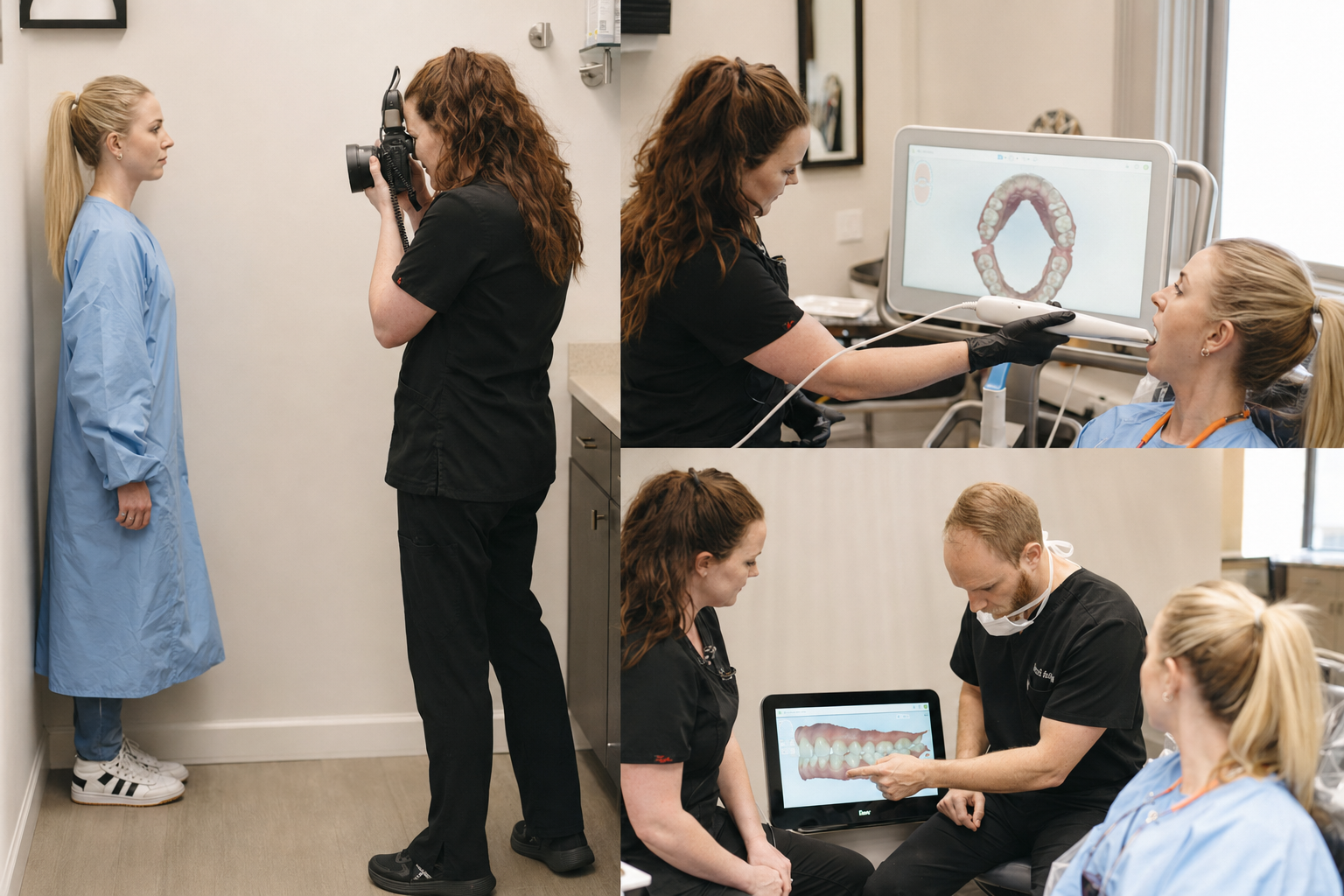
The goal is not to diagnose sleep from the dental chair – in fact, we can’t! We recognize risk, obtain appropriate objective data, collaborate with the diagnosing medical provider and help evaluate dental treatment options when they fit.
A Spectrum, Not a Switch
Some people primarily snore. Others have repeated episodes of reduced or interrupted airflow, increased respiratory effort, sleep fragmentation or oxygen desaturation. Obstructive sleep apnea is one diagnosis within the larger sleep-breathing spectrum. Sleep rarely gives us one tidy box to check!
Symptoms can include unrefreshing sleep, daytime fatigue, dry mouth, morning headache, restless sleep, witnessed pauses, difficulty concentrating or waking frequently. Some patients with significant disease report surprisingly little. Others feel terrible despite a study that appears only mildly abnormal.
That mismatch is why the full clinical picture matters: symptoms, objective respiratory data, medical history, anatomy and treatment response. One number is useful. The whole story is better!
Why Dentists Screen
Dentists see patients regularly and have a front-row seat to many of the structures surrounding the airway. We may notice chronic mouth breathing, dry tissues, a narrow arch, limited tongue space, tooth wear, clenching, shifting teeth or a jaw relationship that prompts more questions.
We can raise the question. We cannot answer it from the dental chair! Screening may identify someone who should be tested, but physicians are responsible for the medical diagnosis and for prescribing the appropriate or acceptable therapy.
How Objective Sleep Testing Fits In
This is where objective data earns its keep!
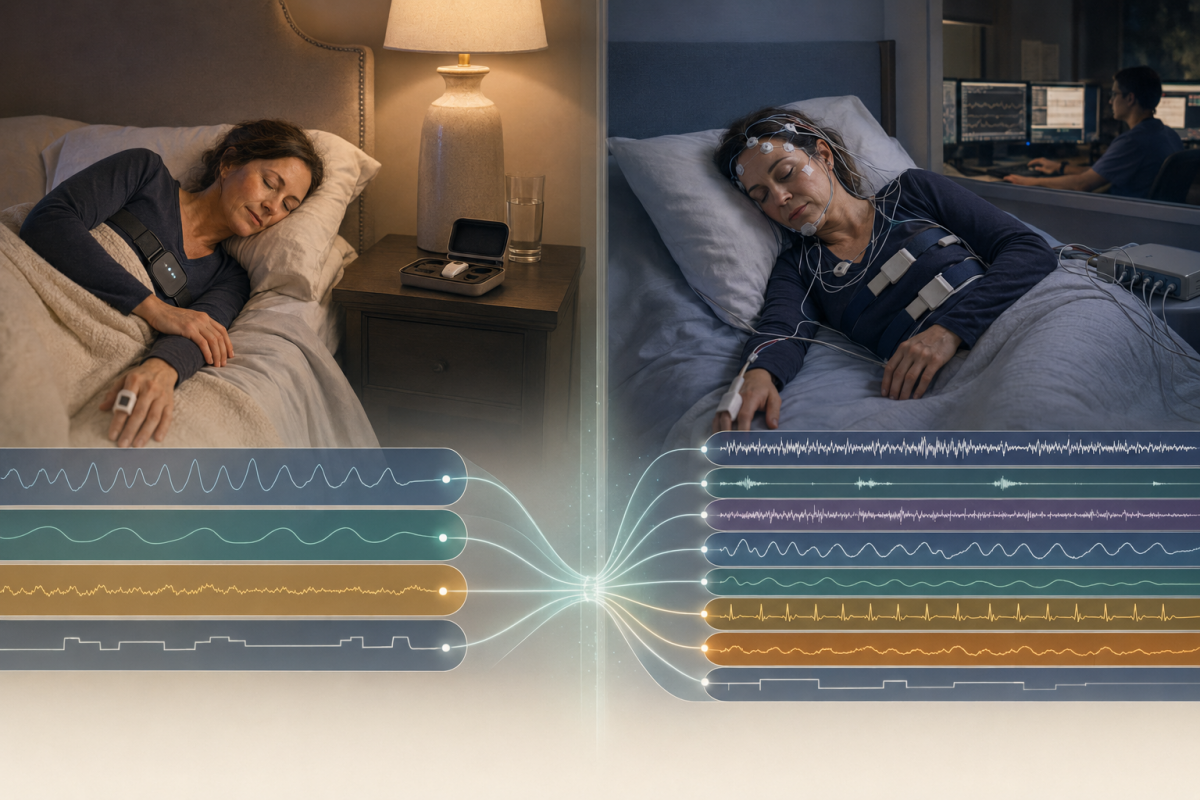
Home Sleep Apnea Testing
For an appropriate uncomplicated adult with suspected obstructive sleep apnea, a home sleep apnea test may offer convenient objective data in the patient’s normal sleeping environment. The study records respiratory signals that can be interpreted by a qualified medical provider.
In-Lab Polysomnography
An in-lab study measures more channels and is appropriate when a home study is not suitable, when another sleep disorder or medical condition may be involved, or when a home study does not adequately explain persistent symptoms. For most patients, a home sleep test can tell if there is an issue, and in office radiographs and records can reveal any underlying skeletal issues.
A Negative Home Study Does Not End Every Evaluation
A negative home test is not always the end of the story! Home testing has limitations. If clinical concern remains after a negative or inconclusive result, the next step should be discussed with the medical provider rather than assuming sleep-disordered breathing has been excluded.
Understanding the Numbers
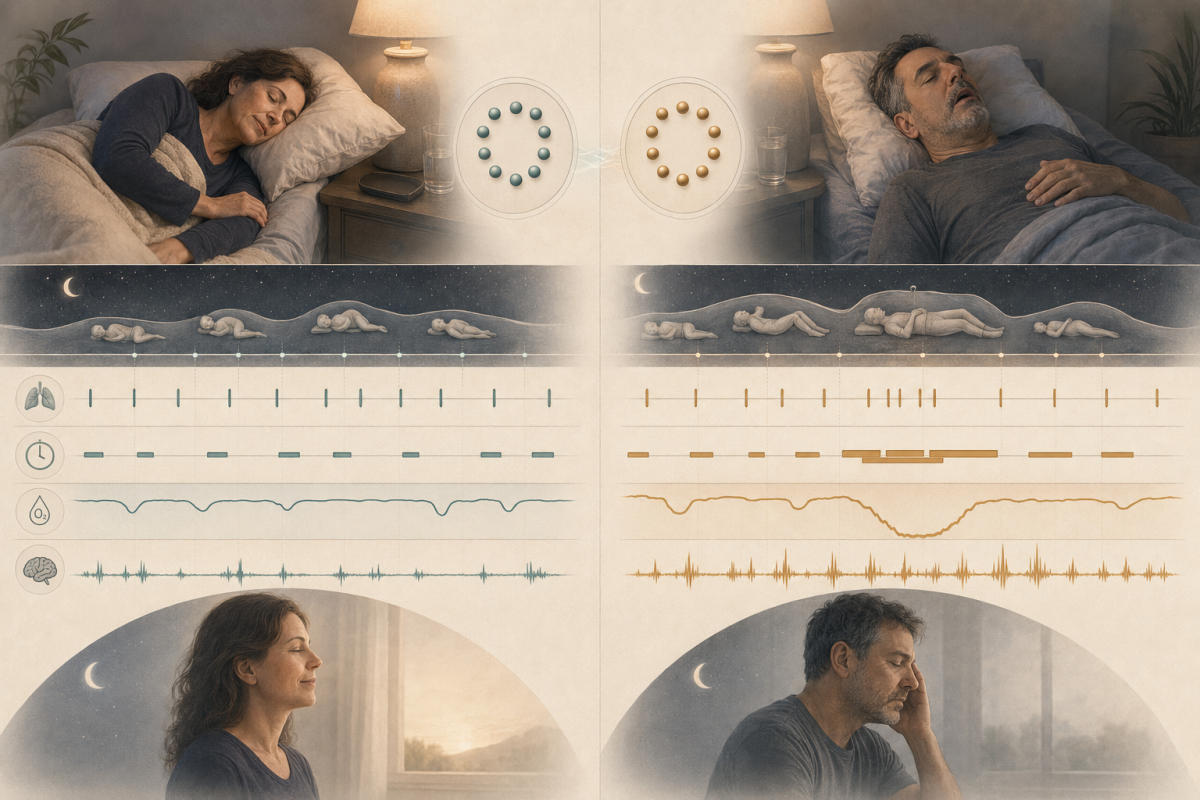
AHI gets most of the attention, but it is not the whole report!
AHI, RDI and REI
These indices summarize respiratory events, but they are calculated differently depending on the study type and signals available. RDI may include respiratory-effort-related arousals in addition to apneas and hypopneas. REI is commonly used for home testing when true sleep time is not directly measured. Similar-looking numbers do not always mean identical things! AHI and RDI are typically representative of the average number of times, per hour, that someone has either an apnea or hypopnea event (AHI) or respiratory disturbance event (RDI). For AHI, a measure of <1 would be ideal, 1-4.9 typically correlates to SDB. 5-15 is mild obstructive sleep apnea, 15-30 is moderate, and >30 is considered severe AHI. RDI, which is most commonly correlated to grinding, clenching, or bruxism, is a similar scale – less than 1 is ideal. Many patients can have an AHI that is low, but have a high RDI, and still have symptoms associated with SDB.
Oxygen and Event Pattern
Minimum oxygen saturation, oxygen-desaturation burden, event duration, body position and clustering can add important context. Two patients with a similar index may have very different physiological patterns.
Symptoms and Comorbidities
Daytime sleepiness, cardiovascular and metabolic health, insomnia, pain, medications and other sleep conditions can change the significance of the same respiratory data. This is why medical interpretation matters.
Treatment Is Not One-Size-Fits-All
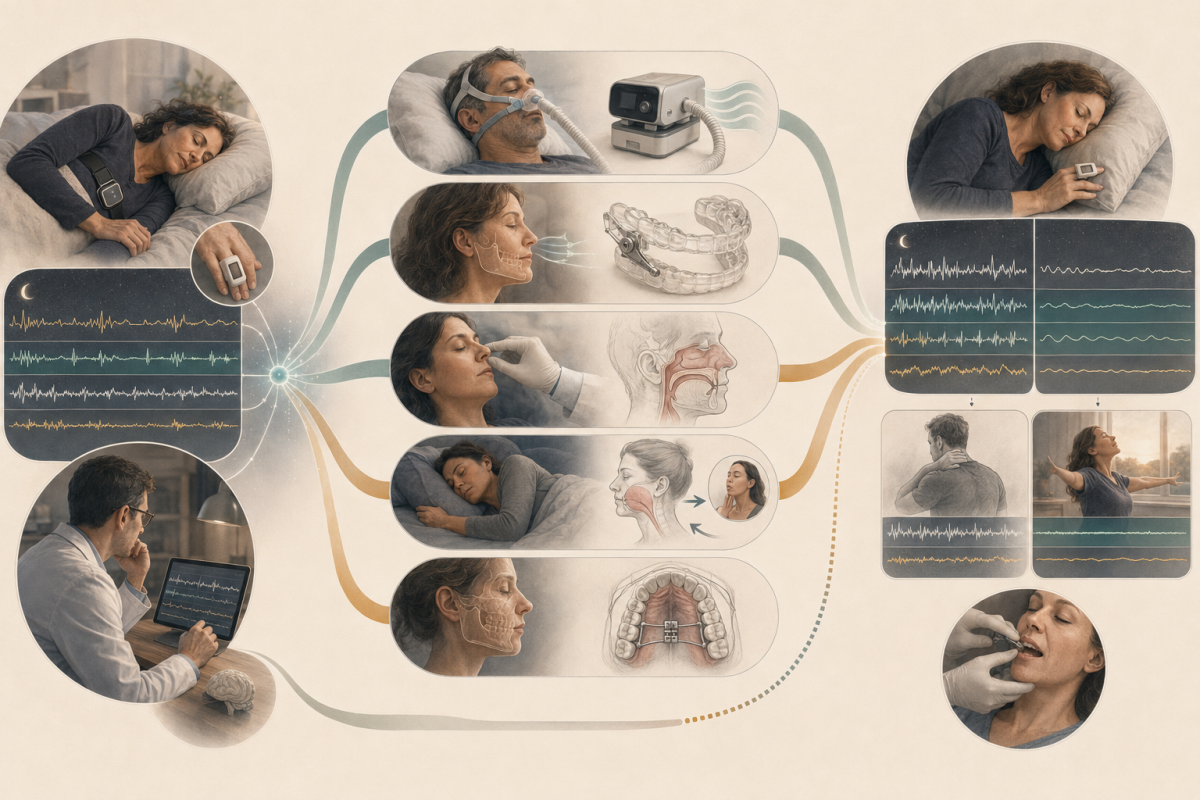
Positive Airway Pressure
PAP therapy is highly effective at supporting the airway. If CPAP or another PAP mode is working well and the patient is using it comfortably, that is a win! Successful treatment does not become a failure simply because it is not dental treatment.
Oral Appliance Therapy
For selected adults, a physician may prescribe a custom, titratable oral appliance. The appliance is fitted and adjusted by a qualified dentist, monitored for dental or bite-related side effects and followed by objective sleep testing to confirm efficacy.
Medical, ENT and Surgical Care
Nasal obstruction, tonsillar tissue, medication effects, weight, cardiopulmonary health or other medical factors may require evaluation outside dentistry. Some patients benefit from ENT care or surgical options.
Behavioral, Positional and Myofunctional Strategies
Sleep position, alcohol or sedative timing, nasal-breathing support and myofunctional therapy may contribute to a coordinated plan. Their role depends on the patient’s diagnosis and phenotype.
Orthodontics and Skeletal Expansion
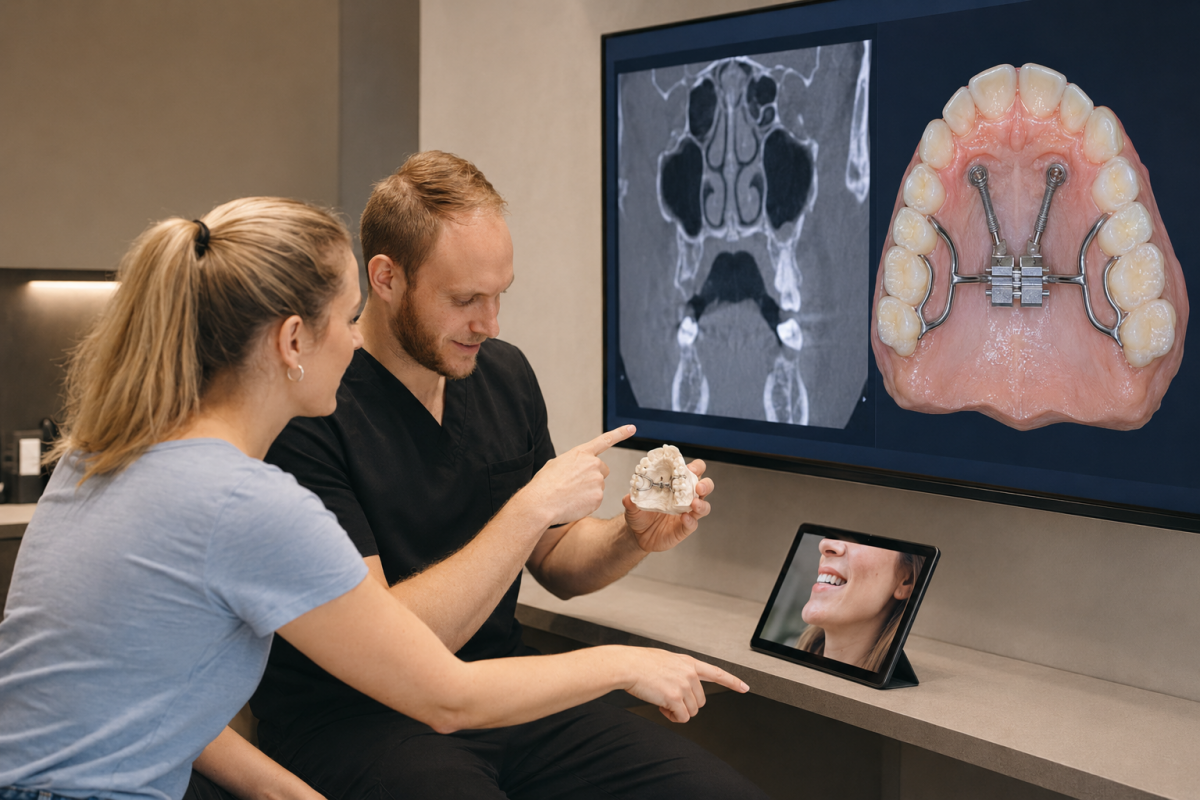
MARPE can address a true transverse maxillary deficiency and may change nasal and oral dimensions in selected patients. It should not be presented as a universal treatment for obstructive sleep apnea. If sleep improvement is a treatment goal, objective testing before and after treatment is essential.
The Pinewood Airway Protocol
The protocol is not an alternative diagnosis or a promise that one appliance fixes everyone! The Airway Protocol was introduced by Spear Education and offers an opportunity to treat symptoms, monitor progress, and find an oral appliance that is right for the patient. It is a staged way to evaluate modifiable factors and treatment response. We begin with nasal breathing when appropriate and nasal dilators. Then we may test reversible changes in tongue space, vertical support and mandibular position before discussing long-term appliances or structural treatment. This process typically takes about 3 months.
For patients with diagnosed obstructive sleep apnea, this process does not replace PAP, a physician-prescribed oral appliance or medical treatment. It helps determine which dental variables are relevant and whether a proposed intervention actually changes objective sleep data. After a temporary device is made during the airway protocol, the patient has the option to either make a more long-term appliance of that type, or to ‘turn themselves into the device’ and fix the underlying dental or skeletal issue causing the disturbance.
Retesting Is Part of Treatment
Feeling better matters. Proving the breathing improved matters too! Snoring may improve while respiratory events persist. A patient may feel better without achieving adequate control, or show objective improvement before noticing a dramatic change in symptoms.
That is why treatment intended to improve sleep-disordered breathing should be objectively retested and reviewed with the medical provider. Dental follow-up also matters because appliances can change tooth position, bite and jaw comfort over time.
Frequently Asked Questions
Can a dentist diagnose sleep apnea?
No. A dentist can screen, identify risk, help arrange appropriate testing and provide dental treatment after medical diagnosis and prescription where required.
Does snoring always mean sleep apnea?
No. Snoring can occur without obstructive sleep apnea, but it should not automatically be dismissed—especially when other symptoms or risk factors are present. Snoring, or audible grinding during sleep – are both abnormal and should be evaluated.
Does clenching prove there is an airway problem?
No. Clenching and bruxism have multiple possible contributors. They may be part of the pattern, but they are not diagnostic. They are usually one of the first signs that there may be an airway issue, which is why we usually recommend a sleep test if there is obvious sings of grinding, clenching, or bruxism.
Can an oral appliance replace CPAP?
For selected patients, a physician may prescribe oral appliance therapy as an alternative. The choice depends on diagnosis, severity, preference, anatomy, medical factors and verified response.
Does mouth taping treat sleep apnea?
No. Mouth taping does not diagnose or treat obstructive sleep apnea. It may also be inappropriate when nasal breathing is limited or in certain medical circumstances. Mouth taping can, however, improve CO2 tolerance and improve the learned ability to breathe through the nose, but should ideally be done under the guidance of a healthcare professional.
Better Sleep Care Begins With Clear Roles
Dentistry can contribute meaningful observations, reversible trials and treatment options. Sleep medicine contributes diagnostic testing, medical interpretation and broader disease management. Better care begins when everyone communicates, does their part, and treats the underlying cause – not just management of symptoms.