
MARPE & Adult Maxillary Expansion
MARPE & ADULT MAXILLARY EXPANSION
Adult Expansion, Planned in Three Dimensions.
MARPE is a long acronym for a very specific job! Miniscrew-assisted rapid palatal expansion applies expansion forces more directly to the maxillary skeleton in selected adolescents and adults. The goal is not simply to push teeth outward. It is to address a true transverse deficiency of the upper jaw.
That distinction is everything. Every narrow smile does NOT need an expander! MARPE begins with diagnosis, careful measurement and a plan for what happens after expansion.
What Is a Transverse Maxillary Deficiency?
The maxilla is the skeletal foundation of the upper teeth and contributes to the floor of the nasal cavity. A transverse deficiency means that foundation is too narrow relative to the lower jaw, the teeth or the needs of the patient. Think of it as a width problem at the foundation—not simply crooked teeth upstairs!
The dental arches may compensate. Upper back teeth can tip outward and lower teeth can tip inward, hiding the skeletal mismatch. A patient may have crowding, crossbite, limited tongue space, an insufficient buccal corridor, shifting or chipping teeth, anterior wear or a bite that never feels fully stable.
Those findings raise the question. They do not answer it! Candidacy depends on the facial skeleton, tooth positions, periodontal support, palatal anatomy, symptoms and goals.
Why Adult Expansion Is Different
Adults are not just large children! In a growing child, a conventional tooth-borne expander can often separate the midpalatal suture and widen the developing maxilla. With skeletal maturity, the sutures and surrounding articulations become more resistant.
A conventional expander in an adult may produce more dental tipping and less skeletal change. MARPE uses temporary anchorage devices—small miniscrews—to engage palatal bone and direct more of the force toward the skeletal structures.
Success is not guaranteed. Age alone does not determine the result, but skeletal maturity, suture morphology, bone quality, anatomy and resistance from surrounding structures all matter. Some adults require a surgically assisted approach when nonsurgical expansion is not predictable or does not succeed. Good planning includes knowing where the limits may be!
Who May Benefit From an Evaluation?
The question is not simply, “Could we expand?” It is, “Should we—and what problem are we solving?”
Documented Transverse Discrepancy
The upper jaw is measurably narrow relative to the lower jaw, with or without a visible posterior crossbite.
Dental Compensation or Instability
Posterior teeth are tipped to camouflage the skeletal relationship, or the patient has recurrent shifting, chipping, anterior wear, recession or an unstable bite.
Crowding or Limited Tongue Space
The available oral volume is restricted by the skeletal arch form, and expansion would support a more appropriate orthodontic or functional plan.
Smile-Width Concerns
The smile shows a broad buccal corridor or narrow arch, and the esthetic finding corresponds to a true skeletal or dentoalveolar limitation—not merely tooth shape or lip dynamics.
Nasal or Airway Concerns With Transverse Deficiency
The patient has nasal-breathing or sleep-related concerns and a documented maxillary deficiency that may be structurally relevant. The sleep question still requires objective testing; the transverse question requires orthodontic and skeletal evaluation.
The Digital MARPE Evaluation
This is where digital planning gets fun! We start with the destination, then work backward through the records, appliance and finishing plan.
Define the Goal
Are we addressing crossbite, crowding, tongue space, smile width, restorative stability, nasal breathing, sleep-related concerns—or several different goals at once? The intended outcome determines what we measure.
Photograph the Face and Smile
Facial and smile photographs document symmetry, proportions, arch display, buccal corridor and the relationship between the teeth and lips. They keep the plan connected to the PERSON—not just the scan!
Capture Digital Models and the Bite
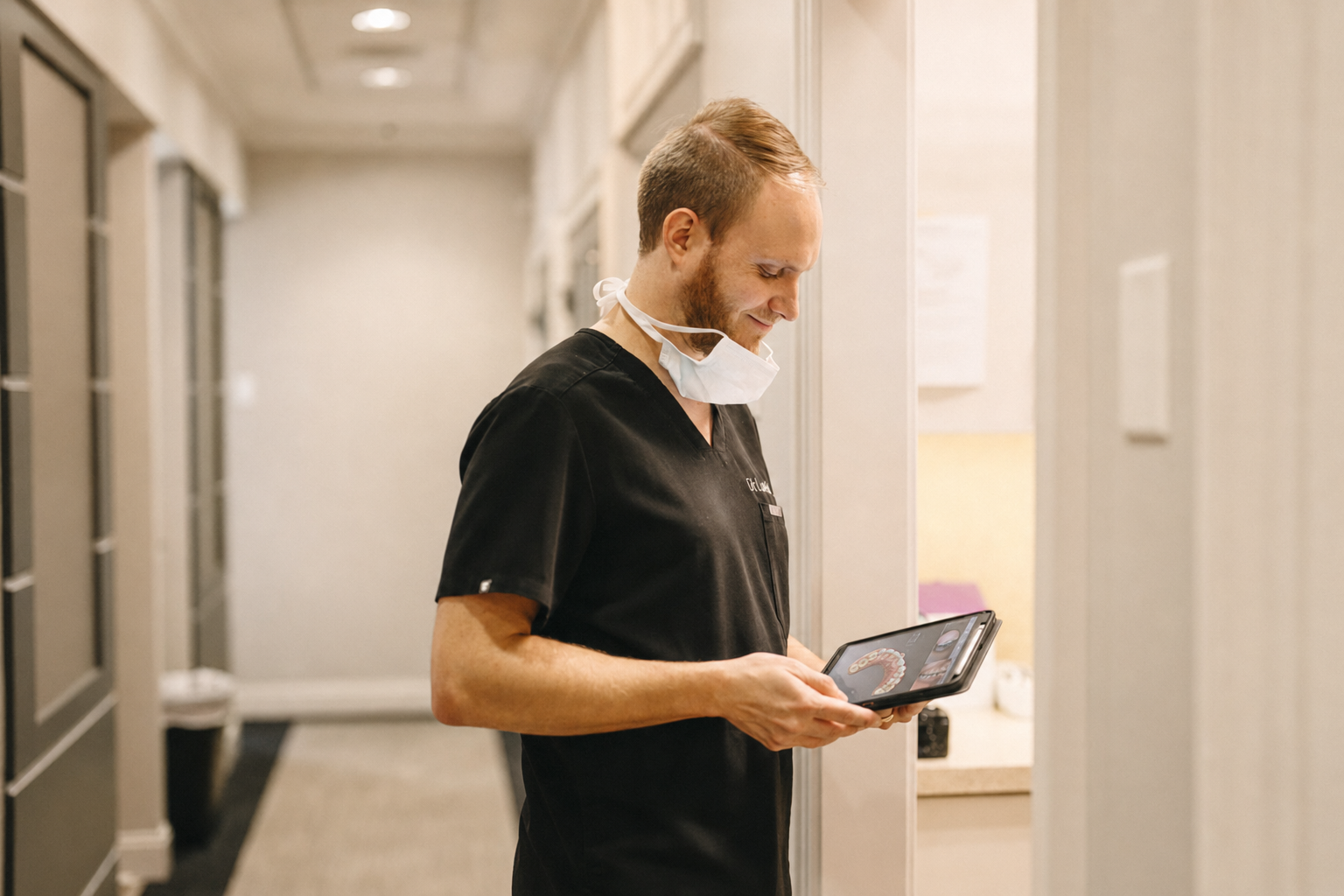
Intraoral scans let us measure arch form, tooth inclination, crowding and the upper-to-lower relationship. They also become the foundation for appliance design and the orthodontic phase that follows. Yes, we really can plan a lot before the appliance ever reaches the mouth!
Evaluate the Skeleton With CBCT
When clinically justified, CBCT helps us evaluate skeletal width, palatal bone, the midpalatal region, nasal floor, roots, sinuses and surrounding anatomy. It also helps identify safe, useful zones for miniscrew engagement and recognize limitations BEFORE placement—which is exactly when I want to find them!
CBCT is incredibly useful, but it is not a sleep study! It can document airway dimensions and areas of anatomical constriction. It cannot diagnose obstructive sleep apnea or show how the airway behaves through an entire night. If sleep improvement is part of the goal, objective sleep testing belongs in the records.
Plan the Appliance and Miniscrew Positions
The appliance should be customized to the palate, desired force system and available bone. Digital planning helps select miniscrew diameter and length, position the appliance relative to the teeth and tissue, and keep “that looks about right” out of miniscrew placement!
Plan the Orthodontics Before Expansion Begins
Expansion creates a new skeletal and dental relationship. Before we begin, I want to know how the teeth will be aligned, how space will be managed and how the final bite will be coordinated. The expander is not the end of the plan!
What Treatment Usually Involves
The appliance gets plenty of attention, but it is only the beginning!
Appliance Placement
The custom expander is fitted and stabilized using miniscrews that engage palatal bone. Placement is performed with local anesthesia, and the appliance is checked for tissue clearance, stability and activation.
Activation and Monitoring
The patient activates the appliance according to an individualized schedule. We monitor symptoms, tissue health, appliance stability, dental changes and evidence of expansion. This is a process—not a “turn the key and hope” situation!
Verification
Clinical changes and digital records help verify the response. Depending on the case, additional imaging may be justified to confirm skeletal change and evaluate the result while limiting unnecessary radiation.
Retention
After active expansion, the appliance remains in place for a stabilization period while bone fills the expanded suture and the surrounding tissues adapt.
Invisalign or Orthodontic Finishing
When both expansion and Invisalign are planned, structural correction generally comes first. Clear aligners can then close spacing, upright teeth that were compensating, coordinate the arches and finish the bite. Trying to complete cosmetic alignment before correcting a meaningful transverse deficiency can make the later plan harder and less stable.
What About the Space Between the Front Teeth?
Yes, a space may open between the upper front teeth! That usually gets attention. Its size varies, and the absence of a dramatic space does not by itself prove expansion failed. The space is normally managed during the orthodontic finishing phase.
I prefer to discuss this BEFORE treatment so nobody is surprised by the sequence: create the skeletal change, allow stabilization, then align and coordinate the teeth.
MARPE, Nasal Breathing and Sleep
The maxilla and the nasal floor are neighbors, so skeletal expansion can change dimensions of the nasal cavity and nasopharyngeal region. Some selected patients report easier nasal breathing, and emerging research has documented respiratory improvements in specific groups.
That does NOT turn MARPE into a universal sleep-apnea cure! The evidence is promising but not complete, and the primary indication remains a transverse maxillary deficiency. When sleep-disordered breathing is also present, success should be evaluated with objective sleep data before and after treatment.
Risks and Limitations
MARPE can involve pressure, soreness, tissue irritation, inflammation around miniscrews, asymmetrical response, dental tipping, periodontal effects, miniscrew loosening, unwanted tooth movement or failure to achieve skeletal separation. Relapse and the need for retention must also be considered.
In some adults, the maxilla will not expand predictably without surgical assistance. Recognizing that possibility is part of informed treatment planning. It is much better to discuss the limits honestly than pretend every adult is a nonsurgical candidate!
Frequently Asked Questions
Is MARPE the same as Invisalign?
No. MARPE is intended to create skeletal and arch-width change. Invisalign moves and aligns teeth. They may be used sequentially as parts of one plan.
Does every adult with crowding need expansion?
No. Crowding has several possible causes. MARPE is appropriate only when the diagnostic records support a transverse skeletal problem and the expected benefit justifies treatment.
Can MARPE cure sleep apnea?
It should not be promised as a cure. Selected patients with transverse deficiency may experience respiratory improvement, but sleep-disordered breathing is multifactorial and must be objectively evaluated.
Can every adult expand without surgery?
No. Anatomy and skeletal maturity vary. Some patients require surgical assistance, and some are not appropriate candidates for the treatment goal being considered.
The Appliance Gets the Attention. The Plan Does the Heavy Lifting!
The real treatment begins before the expander is made: determine whether the maxilla is deficient, define the desired change, plan the miniscrew engagement, understand how the teeth will respond and know how the bite will be finished afterward.
MARPE is most powerful when it is not treated as a stand-alone appliance. It is one carefully planned step in a larger structural, orthodontic and functional plan!